
- Home
- Blog
- The INTERMED Group
- Solutions
- Expertise
- Recruitment
- Documents
- Contact

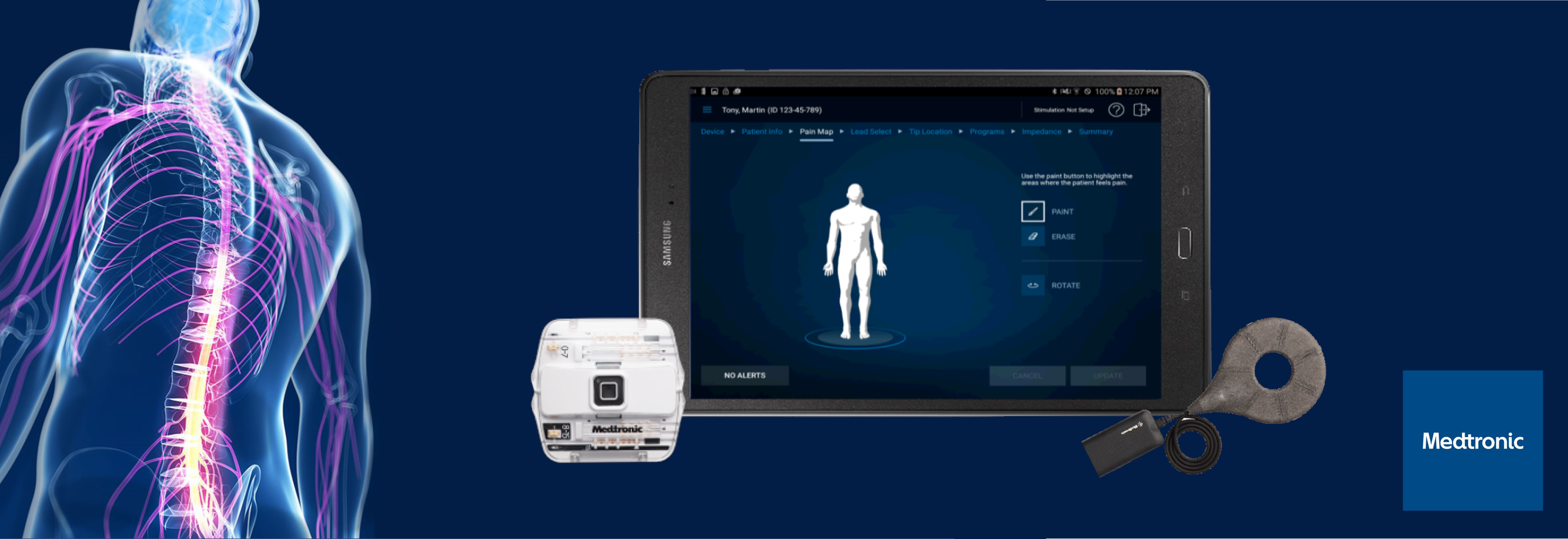
Spinal neurostimulation is a technique that has been around for several decades. It involves sending stimuli, via an electrode implanted in the spinal column, to block the pain message in the posterior cords of the spinal cord. It should be noted that this stimulation can generate paresthesias, which are painless in the targeted body regions.
Implantable spinal cord stimulation is indicated for chronic pain, when non-interventional or drug-based techniques have failed. Candidates for neurostimulation are evaluated by a multidisciplinary team at a pain center.
Implantation takes place in two stages. In the first stage, one or two electrodes (either surgical or percutaneous) are implanted in the epidural space. Following electrode placement, there is a real-life stimulation test phase (around 7 days), during which pain and stimulation efficacy are assessed. If the test is positive (pain reduced by at least 50%), the stimulator is implanted either in the abdominal area or in the upper part of the buttocks. If not, the probe will be removed.
After implantation, the patient will be monitored by the Pain Center team. Consultations will be held on a regular basis. During these consultations, various parameters can be modified to improve the patient's pain management.
Equipment has come a long way, especially in recent years. The latest probes and neurostimulators are now MRI-compatible. There are two types of neurostimulator: rechargeable and non-rechargeable. The choice is determined by HAS recommendations (implantation of a rechargeable neurostimulator for primary implantation when stimulation exceeds 3.5V, or as a replacement if the non-rechargeable neurostimulator has lasted less than two and a half years).
Faced with the COVID-19 crisis, the demand for respirators increased.

HISTORY Radioactivity was discovered in 1896 by Henri Becquerel and pa
There are 20,000 child victims of domestic accidents every year in France, including